
 Talk To Astrologer

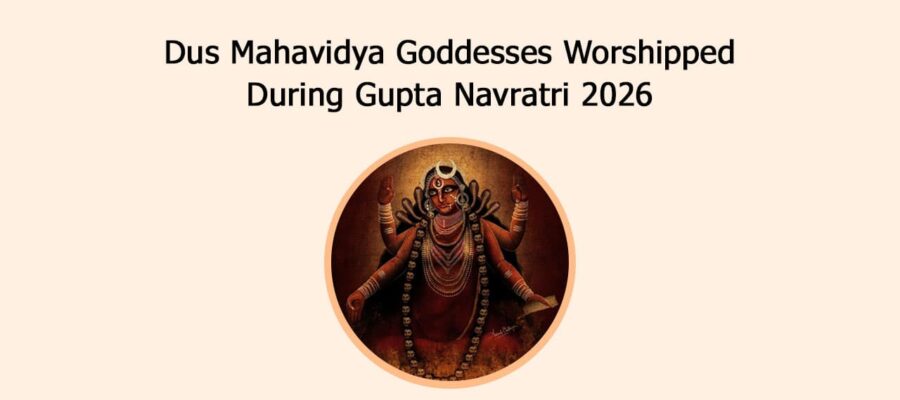
Gupta Navratri 2026: Let’s be honest, most of us grew up knowing two Navratris. The one is Chaitra Navratri which comes in spring season and the other is Shardiya Navaratri in autumn season. This is the time when the whole country erupts in Dandiya, Garba etc. Those are the ones our families talk about, the ones we dress up for, the ones everyone knows.

But there is a Navaratri that most people have never even heard of. It doesn’t come with loud music or decorated stages. There are no public gatherings. You won’t see it trending on social media or find your neighborhood lit up for it. And yet, if you ask any experienced astrologer or occult practitioner, they will tell you this is arguably the most powerful Navratri of all.
It’s called Gupta Navaratri 2026 literally, the secret Navratri. And in 2026, the Ashadha Gupta Navaratri falls from 15th July to 23rd July.
Also read: Horoscope 2026
Know More About This Navratri From Best Astrologers On Call
Know More About Gupta Navratri 2026
The Hindu Panchang tells us that there are actually four Navratris in a year. Most people only celebrate the famous two. The other two Navratris are Magha Gupta Navratri falls in January-February and Ashadha Gupta Navratri falls in June-July which are hidden ones.
The word ‘Gupt’ simply means secret or hidden. These Navaratris have been observed for centuries, not in temple courtyards or public spaces, but in quiet rooms, in forest Ashrams, by sages who spent these nine nights in intense, undisturbed spiritual practice. The rituals were never meant to be announced or displayed. The power, they believed, came precisely from the secrecy.
During ancient Vedic times, only a small circle of accomplished Sadhaks, spiritual seekers who had dedicated their lives to inner practice knew about Gupta Navratri 2026. Tantrics and Aghori saints would use these nine nights for their deepest Saadhanas, calling upon forms of the Goddess. That tradition has survived, quietly, all the way to today.
AstroSage AI Brihat Horoscope For All The Valuable Insights Into Future
Ashadha Gupta Navratri 2026: Mark These Dates
This year Ashadha Gupta Navaratri begins on Wednesday, 15th July, 2026 and ends on Thursday, 23rd July, 2026.
The festival falls during Shukla Paksha in the Hindu month of Ashadha. The Moon is growing during this period, which is considered deeply auspicious for spiritual practices and intention-setting.
| Day | Date | Events |
| Day 1 | Wednesday 15th July, 2026 | Ghatasthapana + Maa Shailputri Puja |
| Day 2 | Thursday 16th July, 2026 | Maa Brahmacharini Puja |
| Day 3 | Friday 17th July, 2026 | Maa Chandraghanta + Maa Kudhmanda Puja |
| Day 4 | Saturday 18th July, 2026 | Maa Skandamata Puja |
| Day 5 | Sunday 19th July, 2026 | Maa Katyayani Puja |
| Day 6 | Monday 20th July, 2026 | Maa Kalaratri Puja |
| Day 7 | Tuesday 21st July, 2026 | Durga Ashtami + Maa Mahagauri Puja |
| Day 8 | Wednesday 22nd July, 2026 | Maa Siddhidatri Puja |
| Day 9 | Thursday 23rd July, 2026 | Navratri Parana |
One date to note carefully, Sandhi Puja on the night of Day 7 going into Day 8. This is the sacred transition between Ashtami and Navami Tithi and in 2026, it falls between 4:52 AM and 5:40 AM on 22nd July, 2026. Astrologers consider this the single most powerful 48 minute window of the entire Navaratri. If you are planning any special Puja or Mantra recitation this season, that’s the time.
Get New Year’s Predictions Yearly Horoscope 2026
Ashadha Gupta Navratri 2026 Goes By Many Names
Generally, this Navaratri is mostly celebrated in North Indian states, Uttar Pradesh, Haryana, Himachal Pradesh, Punjab and Uttrakhand. Depending on where you are in India, this Gupta Navratri 2026 is called with different names:
- Varahi Navaratri: It is also called Varahi Navaratri because Goddess Varahi takes the central stage during these nine nights.
- Gayatri Navaratri: It is connecting the sacred feminine Gayatri energy to this period.
- Shakambhari Navratri: It is a traditional name used across North India.
- Bhadrakali Navratri: This name is given after the fierce manifestation of the Goddess.
- Guhya Navaratri: This name is used especially in Himachal Pradesh.
Get rid of any career dilemmas in the new year with the CogniAstro Report
Astrological Significance Of Gupta Navratri 2026
Most of us approach Navratri as a time to worship the Goddess, observe a fast, and seek her blessings which is completely valid. But Gupta Navratri 2026 carries an additional layer that Vedic astrologers deeply value; it’s one of the most effective periods of the entire year for Dosha remedies and planetary correction.
The reason comes down to the deities worshipped. During Gupta Navratri 2026, the focus shifts from the nine Navadurgas (who are worshipped in Chaitra and Shardiya Navratri) to Dus Mahavidyas i.e. the ten Tantric forms of Goddess Shakti. And each of these goddesses directly corresponds to one of the nine planets in Vedic astrology.
| Mahavidya Names | The Planet She Governs |
| Maa Kaali | Saturn |
| Maa Taara | Jupiter |
| Tripura Sundari (Shodashi) | Mercury |
| Maa Bhuvaneshwari | Moon |
| Maa Chinnamasta | Rahu |
| Maa Bhairavi | Lagna (Ascendant) |
| Maa Dhumavati | Ketu |
| Maa Baglamukhi | Mars |
| Maa Matangi | Sun |
| Maa Kamala | Venus |
So, if you have been dealing with Shani Sade Sati, Rahu-Ketu Dosha, or Mars is causing trouble in your Kundali; Gupta Navratri 2026 is the best time to worship the corresponding Mahavidya. It’s not a superstition, it’s a system that has been in place for thousands of years, rooted in the understanding that cosmic planetary energies and divine feminine energy are deeply interconnected.
Many astrologers specifically recommend this period for:
- Kundali Dosha remedies to deal with afflictions in the birth chart.
- Rahu-Ketu related issues such as career blocks, confusions, addictions or misfortune.
- Mangal Dosha correction especially for marriage related concerns.
- Karmic purification to remove deep-rooted patterns that keep repeating in life.
Listen to the AstroSage AI podcast – here you’ll find astrology, life’s secrets, destiny omens, and accurate astrological solutions provided by AI. Answers to your life’s most important questions now audibly, in simple language.
Gupta Navratri 2026: Story Behind The Dus Mahavidya
Talking about the Dus Mahavidya, these goddesses are the Tantrics forms of the Divine mother; fierce, unconventional and transformative in ways the gentler forms aren’t.
The story of how they came into being is actually quite striking. According to the Mahabhagavata Purana, Goddess Sati wanted to attend her father’s Yajna, but Lord Shiva refused to let her go. Furious and unwilling to be stopped, Sati simultaneously manifested as ten different goddesses and blocked all ten directions so Shiva could not leave or avoid her. Those ten forms became the Dus Mahavidya.
Here is a brief introduction to each goddess:
- Maa Kaali: The most recognisable and the first among the Mahavidyas. Dark, fierce, standing on the chest of Lord Shiva. She represents the destruction of ego, and liberation that follows. Worshipped for Saturn’s influence and also for removing all kinds of fear.
Kaali Mantra: ‘Om Kreem Kalike Savaha’
Avtar: Krishna
- Maa Tara: Often depicted similarly to Kali but with subtle differences. She is the goddess who guides souls across the difficult ocean of existence. She rules the planet Jupiter and is associated with knowledge and salvation.
Tara Mantra: ‘Om Hrim Treem Hum Phat’
Avtar: Matsya
- Tripura Sundari (Shadoshi): Literally, the most beautiful in the three worlds. She represents the highest state of bliss and is connected to Mercury. Her worship is considered among the most powerful in Tantra.
Shodashi Mantra: ‘Ka E I La Hrim Ha Sa Ka Ha La Hrim’
Avtar: Parashuram
- Maa Bhuvaneshwari: The queen of the universe, controlling all space and creation. She is linked to the Moon and worshipped for mental clarity and emotional balance.
Bhuvaneshwari Mantra: ‘Om Hreem Shreem Kleem Aim Saumh Kreem’
Avtar: Vamana
- Maa Bhairavi: Fierce and fiery, she rules transformation through destruction. She is associated with the Ascendant (Lagna) and is said to burn away what no longer serves you.
Bhairavi Mantra: ‘Om Hreem Bhairavi Kalaum Hreem Svaha’
Avtar: Balram
- Maa Chinnamasta: Perhaps the most startling of the Mahavidyas depicted as having cut off her own head. She represents self-sacrifice, the awakening of Kundalini, and is linked to Rahu. Powerful for breaking patterns and sudden transformation.
Chinnamasta Mantra: ‘Shreem Kleem Hreem Aim Vajra Vairochneye’
Avtar: Narasimha
- Maa Dhumavati: The only widow among the Mahavidyas, depicted as old and inauspicious by conventional standards. She actually represents the dissolution of ego and the wisdom that comes through loss. She rules Ketu.
Dhumavati Mantra: ‘Om Dhoom Dhoom Dhumavati Swaha’
Avtar: Varaha
- Maa Baglamukhi: The goddess who paralyses enemies with a single gesture. Connected to Mars, she is worshipped for victory in disputes, court cases, and conflicts. Extremely popular in Tantric worship for her ability to silence opposition.
Baglamukhi Mantra: ‘Om Hreem Bagalamukhi Sarv Dushtanaam Vaacham Mukham Padam Stambhya Jivhaam Keelya, Buddhim Vinaashya Hlreem Aum Swaha’
Avtar: Kurma
- Maa Matangi: The goddess of arts, intellect, and speech. An outcaste who operates outside conventional rules. She governs the Sun and is worshipped for creative power and mastery of knowledge.
Matangi Mantra: ‘Om Hreem Kleem Hoom Matangyey Hoom Phat Swaha’
Avtar: Ram
- Maa Kamala: The Tantric form of Goddess Lakshmi, seated on a lotus. She governs Venus and is the bestower of wealth, beauty and abundance.
Kamala Mantra: ‘Aim Shreem Hreem Kleem’
Avtar: Kalki
Receive the best outcomes by having a knowledgeable priest perform the Online Puja as you desire while you relax at home!!!
A Practical Guide To Observe Gupta Navratri 2026
You don’t have to be a Tantric or trained Sadhak to observe Gupta Navratri. Devotees can observe this Navaratri with beautiful results.
Start with Sankalp: On the morning of 15th July take a moment before your Puja to clearly state your intention; what you are seeking, what you are offering and how you commit to these nine days. This Sankalp (Vow) is considered the anchor of your entire practice.
Set up the Ghatasthapana: Install a Kalash (a copper or clay pot) at the auspicious Muhurat of Day 1. Place it in front of the Goddess’s image or idol. A coconut sits atop the Kalash, and barley seeds are sown in soil around it; symbolising growth and the abundant energy of the earth.
Daily Puja, morning and evening: Offer fresh flowers, light a Diya, burn incense and offer Bhog to the Goddess each day. Recite the Durga Chalisa and whichever form of the Chandi Path or Durga Saptashati you are comfortable with.
Observe your fast: The Fast runs from Day 1 through Day 9. During this period one should consume sattvic food like fruits, milk, Sabudana Khichdi, Singhare ki Roti with Sendha namak (rock salt), and nuts. What you should avoid completely during these nine days is meat, alcohol, onion, garlic, and any food that is considered tamasic.
Sandhi Puja: Devotees should not miss this one. They should perform Sandhi Puja between Day 7 and Day 8 of Navratri on 22nd July, 2026 between 4:52 AM and 5:40 AM. During this time, Ashtami transitions into Navami which is considered a highly auspicious moment of Navratri.
Conclude with Parana: On Day 9 i.e. on 23rd July, 2026 natives should offer final prayers, distribute Prasad, and formally break their fast.
Click here to buy gemstones, Rudraksha and other astrological products: AstroSage AI Shop
Ashadha Gupta Navratri 2026 Folklore
Long ago, in the ancient kingdom of Kosala, there lived a young prince named Sudarshan. His life was torn apart by betrayal. He had to flee deep into the forest with his mother after a royal conspiracy and mutiny threatened their lives. Lost and far from the world he knew, the young prince once heard an unfamiliar sound echoing through the trees. Being a child, he simply started repeating it, over and over, playfully mimicking what he heard. What he didn’t know was that the sound on his lips was “Kleem” which is a powerful Beej Mantra of Goddess Durga herself. Since it was the time of Gupta Navratri 2026, the Goddess was moved by his innocent chanting and blessed him to reclaim his throne, rule his kingdom, and live a life of name, fame, and prosperity.
The second story takes us to Rishi Shrungi, who was sitting under a Peepal tree one day, guiding devotees who came to him with their troubles. A woman stepped forward from the crowd and told him something painful that she could not receive Goddess Durga’s blessings because of her husband’s deeply immortal conduct. He indulged in all kinds of wrongdoing and forced her to be part of it too, leaving her completely unable to observe any fast, perform any Puja, or carry out any ritual. She wanted nothing more than to take refuge at the feet of the Goddess, but the circumstances had made even that feel impossible. She asked Rishi Shrungi to show her a way.
The Rishi told her that while most people know only of the Chaitra and Sharad Navratri, there exist two secret Navratris in a year during which the ten Mahavidya forms of the Mother Goddess are invoked with great power. He advised her to worship Maa Durga during Gupta Navratri with full sincerity. The woman did exactly that; she performed intense penance through those nine days, and the Goddess heard her. Peace and prosperity returned to her life. Her husband, who had seemed beyond change, gave up his wanton ways and became a responsible family man.
To Know The Time Of Raj Yoga, Order Now: Raj Yoga Report
Gupta Navratri 2026: What Makes This Ashadha Navratri Special
Among all the Gupta Navratri 2026, the Ashadha one has a particularly strong connection to Goddess Varahi, one of the seven mother goddesses mentioned in the Devi Mahatmya, and the Shakti of Lord Varaha.
Each of the nine nights is dedicated to a different form of Varahi, together called the Nava Varahi:
- Night 1: Maha Varahi: The supreme form; worshipped for overall protection.
- Night 2: Chaitanya Varahi: It is linked to Kundalini Shakti which activates dormant spiritual energy.
- Night 3: Sankat Varahi: The obstacle remover grants inner courage to face hardship.
- Night 4: Ugra Varahi: The fiercest aspect, wielding the Hala, Khadga, and Chakra destroys negative energy.
- Night 5: Dhoomra Varahi: It is associated with smoke and illusion which helps you see through Maya, and is said to be particularly powerful for Rahu related Doshas.
- Night 6: Svapna Varahi: It appears in dreams; believed to grant guidance through the subconscious.
- Night 7: Trayambaka Varahi: The three-eyed form; carries Shiva’s energy.
- Night 8: Maha Varahi Ashtami: The most powerful night; Ashtami is always the peak of Navratri.
- Night 9: Adi Varahi: The primordial, original Shakti.
For Astrological Remedies & Services, Visit: AstroSage AI Online Shopping Store!
We hope you liked our blog. Thank you for becoming an important part of the AstroSage AI family. For more interesting blogs, stay connected with us!
Frequently Asked Questions
15 July to 23 July 2026
Best for remedies and spiritual practices
Goddess Varahi is specially worshipped here.