
 Talk To Astrologer

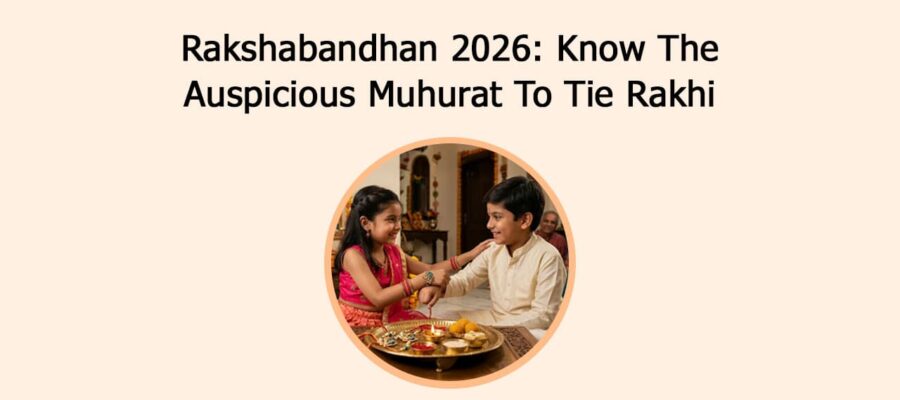
Rakshabandhan 2026: In the Hindu Calendar, every festival carries its own planetary significance; a specific Tithi, a Nakshatra, and a cosmic alignment that makes its celebration not just culturally meaningful but astrologically auspicious. Rakshabandhan 2026 is one such festival. It falls on Shravan Purnima in the sacred month of Shravan.

The festival is dedicated to the most personal of all relationships; the bond between a brother and sister. A sister ties the Rakhi on her brother’s wrist, praying for his long life, prosperity and happiness. The brother vows to protect her in return. It is a promise made on a Purnima, and in Vedic astrology, vows made on Purnima are considered blessed. Through this special blog by AstroSage AI, we bring you the exact date, time, auspicious Muhurat, Puja rituals and Rakshabandhan 2026 legends.
Know More About This Day From Best Astrologers On Call
Rakshabandhan 2026: Date, Purnima Tithi And Muhurat
According to the Hindu Panchang, Rakshabandhan 2026 will be observed on 28th August, 2026 on the Shravan Purnima of Shravan month which is also called Rakhi Purnima.
This Purnima Tithi is considered deeply powerful for rituals of protection, devotion and the strengthening of bonds. This year Purnima Tithi will begin on 27 August 2026 and end on 28 August 2026. Now, let’s take a look at the auspicious Muhurat for Rakhi tying ceremony, so you don’t miss it.
Rakshabandhan Thread Ceremony Muhurat
Auspicious Muhurat Beginning: From 05:56:46 AM
Auspicious Muhurat Ending: Till 09:50:00 AM
Duration: 3 Hours 53 Minutes
Note: According to the Udaya Tithi, the festival of Rakshabandhan will be celebrated on 28 August 2026 and Rakhi will also be celebrated on the same day.
Will Bhadra’s Shadow Remain On Rakshabandhan 2026?
In religious texts, Bhadra is considered especially important on Rakshabandhan 2026. In Sanatan Dharma, it is always a rule to celebrate the festival of Rakhi during the period free from Bhadra, because tying Rakhi to the brother on Rakshabandhan during Bhadra period is considered inauspicious. According to the Hindu calendar, Bhadrakal in the year 2026 will last from 9:08 am to 9:32 pm on August 27, 2026. However, Rakshabandhan 2026, i.e. on August 28, will be devoid of Bhadra and the festival of Rakhi can be celebrated happily.
AstroSage AI Brihat Horoscope For All The Valuable Insights Into Future
Moon Nakshatra On Rakshabandhan 2026
On Rakshabandhan 2026, the Moon will be transiting through Shatabhisha Nakshatra during the Rakhi tying Muhurat. According to the Hindu Panchang, Shatabhisha Nakshatra will remain in effect until 3:13 am on 29 August 2026 after which the Moon will enter Purva Bhadrapada Nakshatra. In Vedic astrology, Shatabhisha Nakshatra is ruled by Rahu and presided over by Lord Varuna, the deity associated with divine protection.
Rakshabandhan 2026: The Sacred Mantra For Tying The Rakhi
In Vedic tradition, the Rakhi is not simply a decorative thread, it is a Raksha Sutra; a thread of protection energized through a sacred Mantra. This is the same Mantra that was chanted during the Raksha Vidhan performed for Lord Indra; the event that gave birth to the very tradition of Rakshabandhan 2026. While tying the Rakhi on her brother’s wrist, the sister should chant:
“Om Yen Baddho Bali Raja Danavendra Mahabalah।
Ten Tvamapi Badhnami Rakshe Maa Chal Maa Chal।।”
To Know The Time Of Raj Yoga, Order Now: Raj Yoga Report
Know The Meaning Of Rakshabandhan 2026
Let us begin with the name itself. Raksha means protection and Bandhan means a bond or a tie. Together, Rakshabandhan 2026 is a sacred bond of protection which is one of the most beautiful concepts in Sanatan Dharma.
In some regions, it is also known as Rakhri, Rakhi Purnima, Raksha Purnima or Nariyal Purnima. It is one of the main festivals of India, celebrated across states, languages, and communities with equal warmth. And it is worth noting that this festival is not exclusive to biological siblings. If someone doesn’t have his own sister, Rakshabandhan can be celebrated with a cousin or anyone who holds a place for a sister in his life.
Click here to buy gemstones, Rudraksha and other astrological products: AstroSage AI Shop
Astrological Significance Of Rakshabandhan 2026
In Vedic astrology, Rakshabandhan 2026 is considered a festival that strengthens emotional bonds and family harmony. The Moon represents emotions, affection, and relationships, while the auspicious Muhurat of this day helps create a positive spiritual environment for performing sacred rituals.
The Raksha Sutra tied during this festival symbolizes protection, responsibility, and divine blessings. Performing the Rakhi ceremony with devotion and following the right traditions is believed to strengthen relationships, remove negativity, and invite peace and prosperity in the family.
Rakshabandhan 2026: The Astrological Rules For Muhurat
In Vedic astrology, the Muhurat for Rakshabandhan 2026 is not simply about picking a convenient time. There are specific rules that govern when this ceremony can and cannot be performed and the most important of these concerns Bhadra.
Our scriptures completely prohibit Rakshabandhan celebrations during Bhadra because it is a period that is considered inauspicious for auspicious ceremonies and Rakshabandhan is not an exception. According to the rules, if Bhadra falls during Aparahan Kaal on Purnima, the Rakhi ceremony cannot be performed during that window.
In such a case, if Purnima prevails during the first three Muhurats of the next day, the ceremony can be performed in the Aparahan Kaal of the second day, this is what scriptures call Sakalyapadit Purnima. If even that condition is not met, Rakshabandhan can be observed on the first day after Bhadra ends, in the latter half of Pradosh.
It is also worth noting that in many regions like Punjab, Aparahan Kaal is not given the same emphasis, and people there traditionally perform the ceremony early in the morning before Madhyan. But, the rule about Bhadra remains firm across all regional traditions. During Grahan Sutak and Sankranti, the festival is observed without any restriction.
Get New Year’s Predictions Yearly Horoscope 2026
Rakshabandhan 2026: Puja Rituals To Be Followed
Rakshabandhan 2026 is not merely a ritual of tying a thread; it is a sacred ceremony that symbolizes love, protection and lifelong blessings. Traditionally, the Puja is performed in the following manner:
- Wake up early, take a holy bath, wear clean or new clothes, and offer prayers to Lord Ganesha or your family deity before beginning the Rakshabandhan rituals.
- Prepare a Puja Thali with a Rakhi (Raksha Sutra), Roli or Kumkum, Akshat (unbroken rice), a Diya, flowers, incense sticks, sweets, and other Puja essentials. Many families also place the Rakhi before the deity and seek divine blessings before tying it.
- If your family follows the traditional custom, prepare a small Potli containing Akshat (rice), yellow mustard seeds, and a small piece of gold or a golden thread. The Potli is worshipped by placing it on or near a Kalash before the ceremony begins.
- During the auspicious Muhurat, invite your brother to sit facing the deity. Traditionally, the brother is seated on a clean wooden platform (Chowki) before beginning the ceremony. Apply a Tilak of Roli and Akshat on his forehead and perform his Aarti, praying for his happiness, prosperity, good health, and long life.
- Tie the Raksha Sutra (Rakhi) on your brother’s right wrist while chanting the sacred Raksha Mantra. In Vedic tradition, the right hand symbolizes Dharma, righteous action, and responsibility, making it the appropriate hand for tying the sacred thread.
- If the Potli has been prepared, tie it on your brother’s right hand after the Rakhi ceremony as a symbol of divine protection. According to tradition, Brahmins also tie a similar sacred thread to their Yajmans while offering blessings.
- Offer sweets to your brother, who then presents gifts to his sister as a token of love, gratitude, and his lifelong promise of care and protection.
- After completing the ceremony, seek the blessings of parents and elders, as their blessings are believed to bring peace, prosperity, and harmony to the entire family.
Free Online Birth Horoscope
Regional Traditions Associated With Rakshabandhan 2026
- In several parts of India, women worship a small piece of gold with Sevaiyan, Kheer, and sweets, placing the Rakhi threads on it before tying them.
- Families who sow wheat on Nag Panchami bring the tender wheat shoots to the Puja. After the Rakhi ceremony, these shoots are placed behind the brother’s ears as a symbol of prosperity and blessings.
- Shravana Purnima is also considered an auspicious occasion for performing Pitru Tarpan and Rishi Tarpan, through which devotees pay homage to their ancestors and the revered sages.
- In some regions, Shravan Kumar is also remembered on this day for his exemplary devotion towards his parents.
Get Best Career Counseling With CogniAstro Professional Report
The Legends Behind Rakshabandhan 2026
Indra and Indrani: The Story Behind The Mantra: Once Yudhishthir asked Lord Krishna to share a story that could ease all the pains of human life. Krishna narrated this:
In ancient times, the Devas and Asuras fought for twelve continuous years. The Asuras were winning and the king of Asuras brought all three worlds under his control, declaring himself lord of the universe. Tortured by the Asuras, Indra approached his Guru Brihaspati for protection.
On Shravana Purnima, early in the morning, a Raksha Vidhan was performed. Guru Brihaspati chanted the Mantra. Indra and his wife recited it alongside him. Indrani got the Raksha Sutra sanctified by all Brahmins and Purohits, and then tied it on the right hand of Indra. With the strength of this sacred thread, Lord Indra was able to win over the Asuras. This is the origin of both the tradition and the Mantra of Rakshabandhan 2026.
Draupadi And Lord Krishna: As per mythology, Draupadi tied a piece of her saree around Lord Krishna’s wounded hand. Being grateful, Krishna promised to protect her and it was in keeping with this promise that he came to Draupadi’s rescue during the Cheer-Haran by Dushasana.
Queen Karmavati And Emperor Humayun
According to a popular historical tradition, Queen Karmavati of Chittor sent a Rakhi to the Mughal Emperor Humayun seeking his help. Humayun kept the respect of her Rakhi and sent forces to fight for the respect of his sister from the Emperor of Gujarat.
Goddess Lakshmi And King Bali: On this sacred day, Goddess Lakshmi tied a Rakhi on the wrist of King Bali, after his polite request.
For Astrological Remedies & Services, Visit: AstroSage AI Online Shopping Store!
We hope you liked our blog. Thank you for becoming an important part of the AstroSage AI family. For more interesting blogs, stay connected with us!
Frequently Asked Questions
Rakshabandhan 2026 falls on 28 August.
Rakhi tying Muhurat will begin from 5:56 AM.
Shatabhisha Nakshatra influences Rakshabandhan rituals.