
 Talk To Astrologer

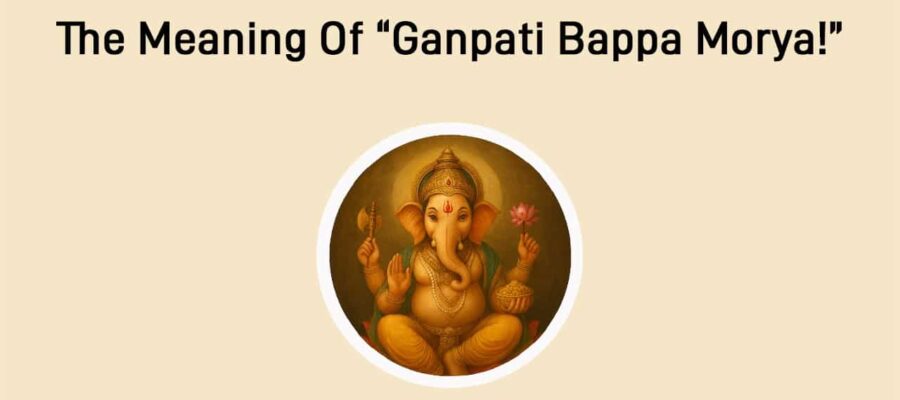
Ganesh Chaturthi is one of the most celebrated and widely cherished festivals in India. Streets come alive with the sound of dhols, pandals are decorated with devotion, and millions of voices chant “Ganpati Bappa Morya.” While many assume this festival marks the birth of Lord Ganesha, the truth is more profound and rooted in history, legend, and devotion. Ganesh Chaturthi is not about celebrating Ganesha’s birth, but rather his visit among devotees, an event that carries both spiritual and cultural significance.

To Know More About This Week, Talk To The Best Astrologers!
This dual nature of the festival, its spiritual origins in Maharashtra, and its later transformation into a symbol of unity during India’s freedom struggle, makes Ganesh Chaturthi unique. To understand why we celebrate this festival the way it is today, let us explore the story of Morya Gosavi and the contribution of Lokmanya Bal Gangadhar Tilak. So without further ado, let us begin with our blog!
The Story Of Saint Morya Gosavi & Ganesha’s Visit
The roots of Ganesh Chaturthi can be traced back to Morgaon, a village in Maharashtra considered sacred to Lord Ganesha. It was here that Ganpati took his Mayureshwar form to kill the demon called Sindhu. Here, Morya Gosavi, a saint belonging to the Ganapatya sect, dedicated his life to worshipping Ganesha. His devotion was so steadfast and pure that it moved the deity himself.
According to the legend, Ganesha was so pleased with Morya Gosavi that he came down to Morgaon to bless him and his followers. In recognition of the saint’s devotion, Ganesha granted him a boon that devotees would forever remember his name after his death, alongside the deity’s. This is why the phrase “Ganpati Bappa Morya” is still chanted with great reverence during prayers and processions.
Ganesh’s visit also explains the festival’s ten-day duration. The story goes that Ganesha was so content among the people of Morgaon that he delayed his return to his celestial abode, Kailash. After ten days, realising Ganesha had lost track of time and would not come back on his own, Goddess Parvati came to take him back, assuring the devotees that he would return every year and stay with them for the same period. Thus, Ganesh Chaturthi became a celebration of his annual visit rather than his birthday, symbolizing his closeness to humanity and his willingness to live among his devotees.
Ganesha’s birthday is known as Ganesha Jayanti, which is celebrated on the Chaturthi tithi of the Shukla Paksha of Magha month of the Hindu calendar. During Ganesh Chaturthi, Bappa pays visits to our home for 10 days and then returns home on Ananta Chaturdashi, the day of Ganpati Visarjan.
Worried About Your Career, Order CogniAstro Report Now!
The Spiritual Meaning Of Ganesh Chaturthi 2025
This story adds a deeply human dimension to Ganesh Chaturthi. The festival is not simply a ritual; it is an annual reminder of the divine presence in everyday life. For ten days, Ganesha is believed to reside in homes and communities, blessing them with prosperity, wisdom, and harmony.
The chants, drum beats, rituals, and collective devotion reflect the idea that God is not distant but intimately present with those who worship with sincerity. This is perhaps why the festival resonates so strongly with people across regions and generations. It is not just about faith, but also about the joy of welcoming a beloved guest into one’s life. Ganesh Chaturthi is not just a celebration limited to Maharashtra. It is celebrated with similar craze and enthusiasm across the country. But how did it become a huge celebration nationwide?
To Know The Time Of Raj Yoga, Order Now: Raj Yoga Report
The Initiative of Unity By Tilak During Ganesh Chaturthi
While Ganesh Chaturthi was always a significant religious observance in Maharashtra, its reach across the country owes much to Bal Gangadhar Tilak. In 1893, Tilak saw in the festival an opportunity to strengthen the unity of Indians under British colonial rule. At the time, public gatherings were restricted by the British to prevent collective resistance. Tilak ingeniously used Ganesh Chaturthi to bypass these restrictions by turning it into a community celebration.
He encouraged the installation of large idols in public spaces and promoted processions and cultural gatherings around the festival. What was once a private household tradition became a public event, drawing large crowds. Tilak’s vision transformed Ganesh Chaturthi into not just a religious festival but also a platform for social and political solidarity.
This shift had a powerful effect. People from different castes, communities, and backgrounds came together, united in devotion and in their shared desire for freedom. The festival became an instrument of identity and resistance, proving that faith could inspire not just personal devotion but also collective strength.
Confused About Your Moon Sign? Click Here: Moon Sign Calculator
Ganesh Chaturthi continues to be celebrated with the same enthusiasm across India and even in parts of the world where Indian communities live. The festival today stands as a blend of devotion, culture, and unity. On the one hand, it retains its spiritual essence, symbolizing the return of Ganesha to bless his devotees. On the other, it still carries the legacy of Tilak’s vision by fostering togetherness and inclusivity.
The grandeur of public celebrations, the creativity of pandals, the community feasts, and the immersion processions all reflect how a festival rooted in legend evolved into a nationwide celebration. It has become both a deeply personal event, observed at home with prayers and offerings, and a large-scale cultural phenomenon celebrated in streets and cities.
When we welcome Lord Ganesha each year, we are not only honoring tradition but also reliving a promise that Bappa will always return and spend time with us. Ganesh Chaturthi is much more than a festival. It is, and will always remain, a celebration of faith, togetherness, and hope.
For Astrological Remedies & Services, Visit: AstroSage AI Online Shopping Store!
We hope you liked our blog. Thank you for becoming an important part of the AstroSage family. For more interesting blogs, stay connected with us!
Frequently Asked Questions
Bappa’s favorite offering is modak. Especially the Ukadiche modak (steamed rice dumplings filled with jaggery and coconut) are considered his absolute favorite.
Absolutely! You can install Bappa’s idol at home with a pure heart, devotion, and proper discipline. Make sure the idol is made of clay, and daily worship is performed until immersion (visarjan).
Place Lord Ganesha’s idol facing the north or east direction. This is considered auspicious and brings positive energy.