
 Talk To Astrologer

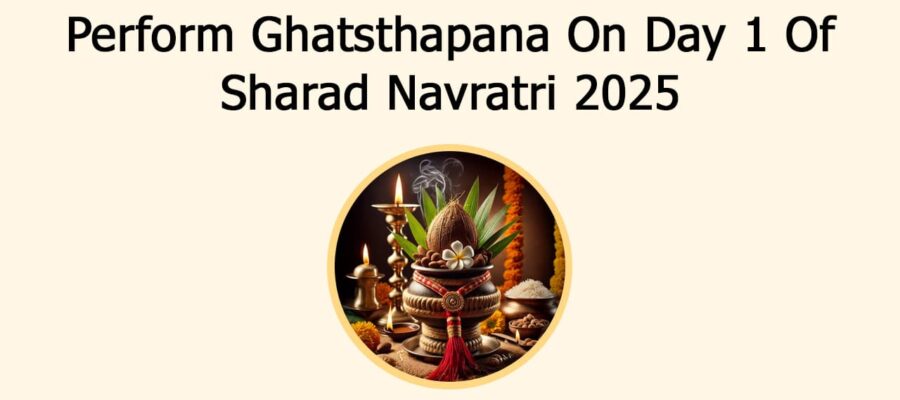
Sharad Navratri 2025: Throughout the year, many festivals are celebrated, but the significance of Sharad Navratri is truly unique. It is not merely a religious celebration, but a divine confluence of power, devotion, and positive energy. The sacred occasion of Ghatsthapana is considered important not only from a spiritual perspective but also from an astrological one. This year, Navratri begins under such a rare planetary alignment that devotees have been awaiting for years. According to astrologers, worship and meditation performed during this auspicious time quickly fulfill desires and open new doors of success in life.

To Know More About This Week, Talk To The Best Astrologers!
During these nine days of Navratri, the nine forms of Goddess Durga are worshipped, bestowing blessings of strength, wisdom, health, and prosperity. Among these, the day of Ghatasthapana is regarded as the foundation of the entire festival. Performing Kalash Sthapana at the correct time and in the proper manner greatly multiplies the results of the nine days of worship. This year, the occasion becomes even more special because the extraordinary alignment of planets and constellations is believed to grant devotees and practitioners the fulfillment of their wishes.
In this special blog by AstroSage AI, we will explore details about Sharad Navratri 2025. We will learn on which day Navratri begins this year, the auspicious timing for Ghatsthapana, the rare and fortunate yogas forming on that day, and the vehicle on which Goddess Durga will arrive this year, along with its meaning.
Sharad Navratri 2025: Date & Time
First, let us learn when Navratri will begin. In the year 2025, the Pratipada Tithi of the Shukla Paksha of the month of Ashwin will start on Monday, 22 September at 1:25 AM and will end on Tuesday, 23 September at 2:57 AM. According to the Udaya Tithi, Sharad Navratri Day 1 will be observed on Monday, 22 September 2025.
Sharad Navratri 2025: Ghatsthapana Muhurat
The correct and auspicious muhurat for Ghatsthapana during Sharad Navratri 2025 will be from 6:09 AM to 8:06 AM, with a total duration of 1 hour 56 minutes.
Additionally, the Abhijit Muhurat will fall between 11:49 AM and 12:38 PM. Ghatasthapana and the worship of Goddess Durga can be performed during either of these timings.
Worried About Your Career, Order CogniAstro Report Now!
Auspicious Yogas Forming During Sharad Navratri 2025
On the day of Ghatsthapana during Sharad Navratri 2025, several highly auspicious yogas such as Shukla Yoga, Brahma Yoga, and Shrivatsa Yoga will be formed.
Shukla Yoga is considered a symbol of peace, purity, and prosperity. Religious activities performed during this yoga are especially successful and bring positivity in life. Talking about Brahma Yoga, this yoga enhances knowledge, wisdom, and depth in religious deeds. Worship and chanting of mantras during this time yield wonderful benefits. Shrivatsa Yoga is called the yoga of wealth and the attainment of Goddess Lakshmi. Worship performed during this yoga not only increases prosperity and abundance.
In other words, every moment of the day will be auspicious for Ghatsthapana, allowing devotees to perform worship throughout the day without worrying about time.
Sharad Navratri 2025: The Vehicle Of Goddess Durga
Another special coincidence of Sharad Navratri 2025 is that this year, Goddess Durga will arrive riding an elephant. According to religious beliefs and Panchang calculations, the vehicle on which Goddess Durga arrives on the first day of Navratri is directly associated with auspicious or inauspicious signs for the coming times. The arrival of the Goddess on an elephant is considered extremely auspicious, as this ride symbolizes peace, stability, prosperity, and happiness. Mythological beliefs state that when Goddess Durga comes riding an elephant, abundance and prosperity remain on the earth throughout the year.
The elephant is the symbol of wisdom, strength, and grandeur, and its arrival indicated rainfall, abundance of grains and crops, and economic progress in the land. It is also said that the arrival of Goddess Durga riding an elephant increases social harmony and brings stability to people’s lives.
According to astrologers, this vehicle not only signifies good signs of natural balance but also strengthens love and unity within families. Religious rituals and acts of charity performed during such a time yield multiplied results. Devotees believe that Goddess Durga, arriving on an elephant, especially fulfills her devotees’ wishes for financial growth, mental peace, and familial happiness.
Rules To Follow During Ghatsthapana In Sharad Navratri 2025
- Ghatsthapana should always be performed in the morning during an auspicious muhurat. The Abhijit Muhurat or Vijay Muhurat are also suitable, but Ghatasthapana should not be done on Amavasya or after sunset.
- The place of worship should be clean, sacred, and peaceful. Purify the space by sprinkling Gangajal.
- Before Ghatasthapana, take a bath and wear clean clothes. White, yellow, or red garments are considered auspicious.
- In a clay pot, sow seven or nine types of grains (wheat, barley, etc.). Fill the pot with water and add roli, akshat, betel nut, a coin, and mango leaves. Place a coconut on top of the kalash and cover it with a red chunari (cloth).
- Place an idol or picture of Goddess Durga near or above the kalash. It is auspicious for the Goddess to face east or north.
- After Ghatsthapana, light an Akhand Jyoti, which should burn throughout the nine days of Navratri. A ghee lamp is considered the best.
- The sprouted barley or wheat sown in the pot is regarded as a symbol of the Goddess’s grace. At the end of Navratri, these sprouts should be immersed in a river or a sacred place.
- During Ghatshtapana, recite Durga Saptashati, Devi Kavach, or other mantras. Take a vow of fasting and perform worship for nine days according to the rules of the Goddess.
- Consume only Satvik food during Navratri, avoiding onion and garlic. Maintain celibacy and pure conduct.
- Worship the different forms of Goddess Durga each day. On the ninth day (Navami), be sure to perform Kanya Pujan and distribute prasad.
Mistakes to Avoid During Ghatsthapana
- Performing Kalash Sthapana before or after the auspicious muhurat reduces the results of the worship.
- Ghatasthapana should not be done on Amavasya, during Rahukaal, or on Ashtami.
- Placing the kalash in a dirty or disorganized place is considered inauspicious. Do not perform Ghatsthapana without purifying the place of worship.
- A kalash without mango leaves, without a coconut, or without roli and akshat is considered incomplete. Also, a broken or cracked kalash should not be used.
- Lighting an Akhand Jyoti during Navratri is considered auspicious, but if the lamp goes out in between, it is regarded as a bad omen. Therefore, the lamp should be looked after continuously.
- During Navratri, consuming meat, alcohol, onion, and garlic is prohibited. One should also avoid anger, lying, and harsh words.
- Not sowing barley or wheat seeds properly or failing to water them on time is considered inauspicious.
- After Ghatasthapana, moving or changing the position of the kalash is forbidden.
- On the ninth day, Navami, make sure you perform Kanya Pujan. Skipping it is considered inauspicious.
To Know The Time Of Raj Yoga, Order Now: Raj Yoga Report
The Correct Vidhi For Ghatsthapana
- On the first day of Sharad Navratri 2025, first purify the place of worship and set up Goddess Durga’s altar in the northeast corner of the house, known as the Ishan Kon.
- Spread a clean red cloth on the altar and place the idol of Goddess Durga on it.
- Begin by worshipping Lord Ganesha first so that all tasks are completed smoothly. Then start the process of Ghatsthapana. Now, take pure soil, mix barley seeds in it, and prepare a sacred base. Place this soil near the altar and on top of it, set a clay pot filled with water.
- Into the water of the pot, add cloves, a piece of turmeric, betel nut, some durva grass, and a one-rupee coin. Now, place mango leaves at the mouth of the kalash and cover it with a clay lid. On top of the lid, place clean rice or wheat grains.
- After Ghatsthapana, throughout the entire nine days of Navratri, perform regular worship of Goddess Durga as well as the kalash, and follow the rules of fasting. It is believed that Ghatasthapana performed in this way brings the grace and blessings of Goddess Durga and fills your life with happiness and prosperity.
Sharad Navratri 2025 Day 1: Goddess Shailputri
On the first day of Sharad Navratri 2025, devotees worship the first form of Goddess Durga, Shailputri. She is called Shailputri because she is the daughter of King Himavan, the lord of the mountains. Goddess Shailputri is regarded as a symbol of power, determination, and purity. In astrology, she is believed to govern the Moon, which influences the mind and emotions. Worshipping her on the first day brings mental peace, stability, and the development of positive thinking. This instills new beginnings, self-confidence, and strong willpower in life.
By worshipping Goddess Shailputri on the first day, laziness, fear, and negative energies are removed from a person’s life. The devotees also gain spiritual strength, which guides them throughout Navratri and in the times to come. It is said that devotees who remember Goddess Shailputri with devotion on the first day of Sharad Navratri have the doors of fortune and prosperity opened in their lives.
Confused About Your Moon Sign? Click Here: Moon Sign Calculator
Sharad Navratri 2025: The Story Of Goddess Shailputri
Goddess Shailputri is the first form of Goddess Durga and received this name because she was born as the daughter of King Himavan, the lord of the mountains. But her birth is connected to a divine story that begins with her previous life. Sati, who was the first wife of Lord Shiva, was the daughter of King Daksha Prajapati. King Daksha did not hold Lord Shiva in respect, and once he organized a grand yajna in which he invited all the gods and sages, but deliberately did not invite Lord Shiva.
When Sati learned of this, she decided to go to the yajna without an invitation, as she wished to witness the celebration at her paternal home. On reaching the yajna site, Sati saw that Lord Shiva was being insulted there, and King Daksha was openly disrespecting him. Unable to bear the humiliation of her husband, Sati, in anger, immolated herself in the sacrificial fire. After this incident, Lord Shiva, enraged, destroyed Daksha’s yajna and began performing the fierce Tandava dance, carrying Sati’s body on his shoulders.
Then Lord Vishnu, with his Sudarshan Chakra, cut Sati’s body into pieces, which fell at different places on the earth, and these places later became known as the Shakti Peethas. In her rebirth, Sati was born in the house of King Himavan and became famous as Shailputri. In this life, she once again attained Lord Shiva as her husband.
Goddess Shailputri rides a bull (Vrishabha), holds a trident in her right hand, and a lotus in her left. She is the embodiment of simplicity, courage, and unwavering devotion. Worshipping her on the first day of Navratri brings stability, peace, and determination into one’s life.
Chant These Mantras To Please Goddess Shailputri
Before beginning the worship, meditate upon Goddess Shailputri with this mantra:
“Vande Vanchhita Labhaya Chandrardhakrit Shekharam।
Vrisharudham Shooldharam Shailputrim Yashasvinim॥”
During the worship of Goddess Shailputri, chant this mantra:
“Om Devi Shailputryai Namah ||”
In the praise of the Goddess Shailputri, chant this mantra:
“Shailputri Mahamaye Chandrardhakrit Shekhare।
Vrisharudhe Shoolhaste Maam Pahi Parameshwari॥”
For greater power in spiritual practice, chant the Beej Mantra:
“Om Hreem Shailputryai Namah॥”
For Astrological Remedies & Services, Visit: AstroSage AI Online Shopping Store!
We hope you liked our blog. Thank you for becoming an important part of the AstroSage family. For more interesting blogs, stay connected with us!
Frequently Asked Questions
This year, Sharadiya Navratri will begin on Monday, 22nd September.
Her vehicle is the bull (Vrishabha), which symbolizes hard work, patience, and determination.
Goddess Shailputri governs the Moon, which is the factor of mind, emotions, and mental balance.