
 Talk To Astrologer

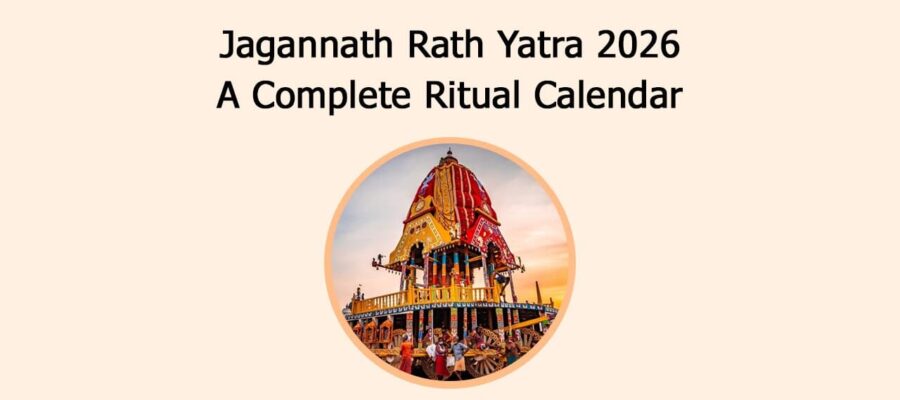
Jagannath Rath Yatra 2026: Every year on a single day of the month of Ashadha, the Lord of the universe Jagannath steps out of his temple. Not through dreams, not through scripture, not through an intermediary but literally, physically, on a towering chariot that rolls down the main street of Puri while millions of hands reach out just to touch the rope. Kings sweep the ground before him. Strangers become family. And for those watching, something shifts quietly but unmistakably in how they understand the relationship between the divine and the human.

Read Horoscope 2026 Here!
To Know More About This Day, Talk To The Best Astrologers!
Jagannath Rath Yatra 2026: Accurate Date And Tithi
Jagannath Rath Yatra 2026 falls on Thursday, 16th July 2026. As per the Hindu Calendar, Jagannath Rath Yatra 2026 is observed on the Dwitiya Tithi of Shukla Paksha in the month of Ashadha.
The Ashadha month itself holds deep cosmic significance in Vedic astrology. It falls during the transition from the peak of summer to the onset of the monsoon, a time when the earth is ready to receive, when seeds are about to be sown, and when the energy of renewal is at its highest. In this charged atmosphere the Lord Jagannath steps out of his abode.
Beginning Of Dwitiya Tithi: On 15th July, 2026 at 11:53 AM.
Ending Of Dwitiya Tithi: On 16th July, 2026 at 8:55 AM.
Rath Yatra Date: 16th July 2026, on Thursday
Bahuda Yatra (Return Journey): 24th July 2026 On Friday
AstroSage AI Brihat Horoscope For All The Valuable Insights Into The Future!
Jagannath Rath Yatra 2026: Know More About Lord Jagannath
The name Jagannath is a Sanskrit compound of Jagat means universe and nath means lord or master which directly means the Lord Of Universe. Lord Jagannath is widely worshipped as a form of Lord Vishnu, and more specifically as Lord Krishna in his universal, cosmic form.
But what makes Lord Jagannath truly unique among all Hindu deities is that he transcends the boundaries of sect, caste, and tradition in a way that very few other forms of the divine have managed. The Jagannath temple at Puri is one of the Char Dham, the four supreme pilgrimage sites of Hinduism.
Hindu is traditionally expected to visit all four once in their lifetime to complete their spiritual journey. And among the four, Puri holds a particular energy because here, the deity is not stone or metal. He is wood. And every 12 years, those wooden idols are replaced in a ceremony called Nabakalebara, where the Brahma Padartha of the old idol is transferred to the new one.
Lord Jagannath is worshipped along with two other deities: his elder brother Lord Balabhadra and his sister Goddess Subhadra. All three reside in the sacred Puri temple and are taken out together on Rath Yatra day, each on their own distinct chariot.
Get New Year’s Predictions Yearly Horoscope 2026
The Legend Behind The Jagannath Rath Yatra 2026
The most widely narrated legend comes from Dwarka, not Puri. Once, the queens of Lord Krishna requested Mother Rohini, Krishna’s stepmother, to narrate the intimate Ras Lilas and childhood stories of Krishna with the Gopis. Rohini hesitated; these were sacred, confidential tales not meant to be spoken publicly. She agreed, but first sent Goddess Subhadra to stand at the door to ensure no one could enter or overhear.
As Rohini began to narrate, Krishna and Balarama arrived. Subhadra stood at the entrance, her arms stretched out to block them. But drawn in by the beauty of what was being told about Krishna’s divine play, all three siblings found themselves completely absorbed standing at the doorstep, lost in the story, their eyes wide, their arms outstretched, their lips slightly parted in wonder.
It was at this exact moment that Sage Narada arrived. He saw the three siblings Balabhadra on the left, Subhadra in the centre, Krishna (Jagannath) on the right in this state of divine rapture, and was so moved by what he witnessed that he asked the Lord to grant him this very form as a permanent vision.
The Lord, pleased, blessed Narada and declared that this form, the three siblings together in this posture, would forever reside in Puri’s Jagannath temple for all devotees to witness. This is why, the idols of Lord Jagannath, Balabhadra and Subhadra have their distinctive appearance such as round eyes wide open, arms stretched outward, in a state of divine wonder and absorption.
The second legend is simpler and more intimate. Goddess Subhadra expressed a deep wish to tour the City of Puri, to go beyond the temple walls and see her devotees and to be among them. Her brothers Krishna and Balarama decide to fulfil her wish by placing her on a chariot and taking her through the city streets. This annual reenactment of that brotherly gesture is what we celebrate as Rath Yatra every year.
Listen to the AstroSage AI podcast – here you’ll find astrology, life’s secrets, destiny omens, and accurate astrological solutions provided by AI. Answers to your life’s most important questions now audibly, in simple language.
The Three Chariots In Jagannath Rath Yatra 2026
This is something most people don’t realise about Rath Yatra; the chariots are not reused from year to year. Every single year, brand new chariots are built from scratch, beginning on the auspicious day of Akshaya Tritiya.
The construction takes approximately 42 days, uses around 4,000 pieces of specially selected wood, and is carried out only by families who hold hereditary rights to these sacred task rights passed down through generations for centuries. Each chariot has its own name, dimensions and symbolic identity.
- Nandigosha: Nandigosha is the Lord Jagannath’s chariot which stands approximately 45 feet tall, has 16 wheels, weighs around 65 tons and it is draped in red and yellow canopy. The Garuda (a divine eagle, mount of Vishnu) sits at its crest.
- Taladhwaja: It is the chariot of Lord Balabhadra which is 44 feet tall with 14 wheels, dressed in red and green. Its emblem is the Palm tree, representing Balarama’s grounded, powerful energy associated with agriculture and Shesh Naag.
- Darpadalana: The goddess Subhadra’s chariot stands 43 feet tall with 12 wheels and a red and black canopy. Its emblem is Lotus. It represents the divine feminine energy that humbles ego and opens the heart.
Click here to buy gemstones, Rudraksha and other astrological products: AstroSage AI Shop
Jagannath Rath Yatra 2026: Complete Ritual Calendar
Rath Yatra is not a single-day event. It is the centerpiece of a sacred sequence stretching across several weeks.
| Date | Event |
| 29th June, 2026 | Snana Yatra |
| 30th June to 14th July, 2026 | Anasara |
| 15th July, 2026 | Gundicha Marjana |
| 16th July, 2026 | Rath Yatra |
| 20th July, 2026 | Hera Panchami |
| 24th July, 2026 | Bahuda Yatra |
| 24th July, 2026 | Suna Besha |
| 25th July, 2026 | Niladri Bije |
- Snana Yatra: The season begins on Snana Purnima on 29th July, 2026, when the idols are brought to the bathing platform and ceremonially bathed with 108 pots of sacred well water. After this the deities enter Anasara; a 15 day period of seclusion where they recover, attended privately with medicinal herbs. During this time, only painted clothes images are shown to Devotees.
- Gundicha Marjana: On 15th July, 2026, thousands of devotees descend on the Gundicha Temple and scrub it clean from top to bottom; purifying the place that will receive the Lord. Chaitanya Mahaprabhu himself is said to have participated in this cleaning with great joy, setting a timeless example of humble service.
- Rath Yatra: The deities are brought to chariots in a swaying, rhythmic procession called Pahandi. First chariot is of Balabhadra, second is of Subhadra and then Jagannath. Before the chariots roll, the Gajapati King of Puri performs Chhera Pahara. He arrives dressed as a sweeper and cleans the floor around all three chariots with a golden broom and sandalwood water. The most powerful king in the region performs the most humble act.
- Then the chariots move. Hundreds of thousands of hands pull the ropes along the Bada Danda (Grand Road) towards the Gundicha Temple, chanting ‘Jai Jagannath’. For nine days, the Lord rests there.
- Hera Panchami: On 20th July, 2026, the wife of Lord Jagannath, Goddess Lakshmi arrives at Gundicha Temple searching for her husband who left without telling her. In a charming, deeply human moment of divine drama, she expresses her displeasure, and the front of Jagannath’s chariot is symbolically damaged by her attendants. Even the Lord of the Universe, it seems, must answer to his wife.
- Bahuda Yatra: On 24th July, 2026, the chariots return stopping at the Mausi Maa Temple, where the Lord is offered Poda Pitha, a baked coconut and rice sweet said to be his favorite. Then comes Suna Besha, where the returned deities are adorned in gold ornaments still seated on the chariots; one of the most visually spectacular Darshans of the entire festival.
- Niladri Bije: Niladri Bije on 25th July, 2026 marks the re-entry, but even here Goddess Lakshmi blocks the temple gate until the Lord’s attendants appease her with sweets and offerings. Only then does she allow him back in.
Get rid of any career dilemmas in the new year with the CogniAstro Report
Astrological Significance Of Jagannath Rath Yatra 2026
In Vedic astrology, Lord Jagannath is directly connected to Jupiter which is the planet of Dharma, wisdom, grace, and spiritual expansion. Worshiping Lord Jagannath on Rath Yatra is therefore astrologically equivalent to propitiating Jupiter’s energy.
Those with a debilitated Jupiter in the 2nd, 5th, 9th and 12th house, or those currently running Shukra Mahadasha or Antardasha are especially advised to observe this day with complete devotion. Offering yellow flowers, Chana Dal, turmeric, and yellow sweets to the Lord on this day is considered one of the most effective Jupiter remedies in the Vedic tradition.
Connection Between Jagannath Rath Yatra 2026 And Devshayani Ekadashi
The Jagannath Rath Yatra takes place just before Devshayani Ekadashi; the day Lord Vishnu enters In Yog Nidra for the four months during Chaturmas. During this period, Lord Vishnu’s active grace is considered dormant which is why marriages and major auspicious events are avoided. Rath Yatra is therefore the last great window to receive Lord Vishnu’s full, active blessings before this cosmic rest begins. This makes it one of the most powerful days in the entire Vaishnava Calendar, astrologically and spiritually.
Receive the best outcomes by having a knowledgeable priest perform the Online Puja as you desire while you relax at home!!!
Ways To Observe Jagannath Rath Yatra 2026 At Home
If travelling to Puri isn’t possible, then you may
- Watch the live telecast with full attention and devotion. This is considered spiritually equivalent to being present in Puri.
- Chant Vishnu Sahasranamam, the 1000 names of Lord Vishnu carry extraordinary potency on this day.
- Offer Chappan Bhog: Prepare a simple offering of rice, Kheer, Malpua, fruits and coconut before the image or idol of Lord.
- Perform Satyanarayan Puja on Dwitiya Tithi of Ashadha Shukla which is considered highly auspicious for this.
- Remove Guru Dosha in your Kundali. Offer yellow flowers, yellow cloth, Chana Dal and turmeric to the Lord as an astrological remedy.
May Lord Jagannath bless all devotees with clarity, liberation, and grace this Rath Yatra 2026.
For Astrological Remedies & Services, Visit: AstroSage AI Online Shopping Store!
We hope you liked our blog. Thank you for becoming an important part of the AstroSage AI family. For more interesting blogs, stay connected with us!
Frequently Asked Questions
Jagannath Rath Yatra 2026 falls on 16th July.
It falls on Dwitiya Tithi of Ashadha Shukla.
The sacred Jagannath temple is located in Puri.