
 Talk To Astrologer

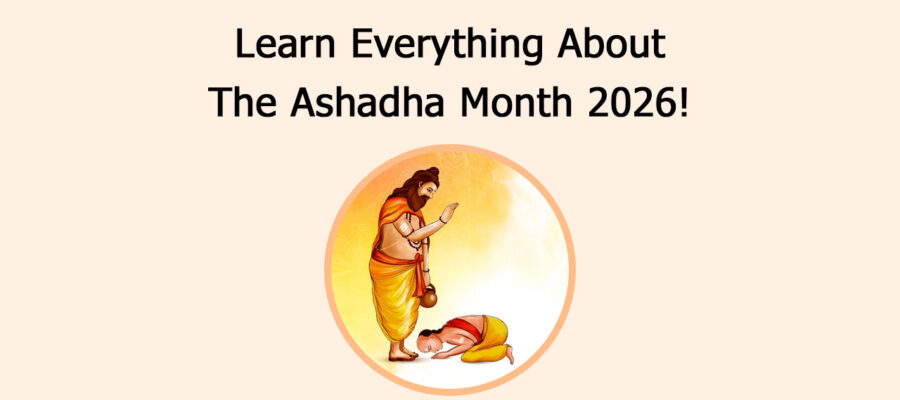
Ashadha 2026: In the Hindu calendar, Ashadha is the fourth month of the year. In North India, the month of Ashadha will last from June 30, 2026, to July 29, 2026. This calendar is widely followed in regions such as Himachal Pradesh, Madhya Pradesh, Uttarakhand, Rajasthan, Haryana, Bihar, Chhattisgarh, and other northern states of India. In the Hindu Panchang, a month is calculated from the day after the full moon (Purnima) to the next full moon. According to the Hindu calendar, the year is Shaka Samvat 2083.

To Know More About This Month, Talk To The Best Astrologers!
Krishna Paksha And Shukla Paksha In Ashadha 2026
This time, the Krishna Paksha of Ashadha 2026 will run from June 30 to July 14, 2026, followed by the Shukla Paksha, which will continue from July 15 to July 29, 2026. In this way, the entire Ashadha month will be observed within this period.
Ekadashi Dates In Ashadha 2026
There will be three Ekadashis during the Ashadha 2026 month:
- Yogini Ekadashi: July 10, 2026
- Vaishnava Yogini Ekadashi: July 11, 2026
- Devshayani Ekadashi: July 25, 2026
Yogini Ekadashi
On this Ekadashi, special worship of Lord Vishnu is performed. This year, it falls on July 10. Observing a fast on this day is believed to destroy all sins, even severe ones such as cutting a Peepal tree. Yogini Ekadashi holds special significance among all Ekadashis. It is believed that observing this fast brings prosperity and happiness in life and fulfills all the desires of the devotee.
Devshayani Ekadashi
Devshayani Ekadashi is the day when Lord Vishnu enters a state of yogic sleep (Yoga Nidra) for four months and awakens on Kartik Shukla Ekadashi. According to beliefs, during this period, the governance of the Earth is handled by Lord Shiva. The sacred period of Chaturmas also begins from Devshayani Ekadashi.
AstroSage AI Brihat Horoscope For All The Valuable Insights Into Future
Pradosh Vrat In Ashadha 2026
Pradosh Vrat is considered highly significant for the worship of Lord Shiva. In 2026, it will be observed on July 12 and July 26. In Hinduism, Pradosh Vrat holds an important place and is regarded as one of the best ways to seek Lord Shiva’s blessings and please Him. This fast is observed on the Trayodashi tithi of each lunar fortnight.
The period just after sunset and before the beginning of the night is known as Pradosh Kaal, during which Lord Shiva is worshipped with proper rituals and devotion. It is believed that devotees who worship Lord Shiva with complete faith and dedication on this day are freed from all troubles in life. Moreover, they are believed to attain moksha (liberation) after death. Religious scriptures also mention that observing Pradosh Vrat grants merit equal to donating two cows.
Free Online Birth Horoscope
Fasts And Festivals In Ashadha 2026
Yogini Ekadashi
According to the Purnimant Hindu calendar, Yogini Ekadashi falls in the Krishna Paksha of Ashadha, while in the Amanta calendar, it falls in the Krishna Paksha of Jyeshtha month. Observing a fast on this day is believed to lead to moksha (liberation).
Jagannath Yatra
The Jagannath Rath Yatra will be held on July 16, 2026. It begins on the Dwitiya Tithi of the Shukla Paksha in the Ashadha month. Every year, Lord Jagannath, the presiding deity of the Jagannath Temple, goes on an annual journey. During this time, Lord Jagannath stays for a few days at the Gundicha Temple, which is believed to have been built by Queen Gundicha.
Devshayani Ekadashi
Devshayani Ekadashi holds great importance in Hinduism. It is believed that from this day onward, for four months, the radiance (tejas) of the Sun, Moon, and nature diminishes, symbolizing that the gods have gone into rest (Devshayana). Due to the weakening of positive and auspicious energies, all auspicious activities are avoided during this period. No auspicious work should be performed during Chaturmas.
Guru Purnima
Guru Purnima will be celebrated on July 29, 2026. On this day, disciples honor and express gratitude towards their gurus (teachers).
Gauri Vrat
Gauri Vrat is observed on the Ekadashi Tithi of the Shukla Paksha in Ashadha month. It concludes five days later on Guru Purnima. This fast is also known as Morkat Vrat.
Vyasa Puja
Vyasa Puja is performed on the Purnima (Full Moon) of Ashadha month in 2026, also known as Vyasa Purnima. The great Hindu epic Mahabharata was composed by Sage Ved Vyasa, who also authored many other sacred texts.
To Know Your Moon Sign, click here: Moon Sign Calculator!
Jagannath Yatra Is Celebrated In The Ashadha Month
The month of Ashadha is considered one of the most auspicious times for pilgrimage. Performing worship and spiritual practices during this month holds special significance, and it is believed that devotees’ wishes are fulfilled. The grand procession of Lord Jagannath, known as the Jagannath Yatra, is carried out, and people from far and wide come to witness it. It is important to note that during the period of Chaturmas, auspicious and ceremonial activities are avoided. Therefore, this month is best devoted to worship and spiritual focus.
Beginning Of Chaturmas
Chaturmas begins with the month of Ashadha and continues for four months. During this period, performing any kind of auspicious or ceremonial activities is considered prohibited. Chaturmas hold great importance in Sanatan Dharma and include the four months of Sawan, Bhadrapada, Ashwin, and Kartik. This period is considered especially significant for undertaking pilgrimages.
Devshayani Ekadashi falls in the month of Ashadha, and from this day, Lord Vishnu is believed to enter a state of yogic sleep (Yoga Nidra). Hence, no auspicious ceremonies are performed during this time. Such activities resume again on Devuthani Ekadashi in the month of Kartik.
Get Your Yearly Report For 2026: Personalized Horoscope 2026
Chaturmas In Ashadha 2026
In the Hindu month of Ashadha, Chaturmas begins with Devshayani Ekadashi. The term Chaturmas means “four months” and symbolizes a period dedicated to spiritual practices, fasting, and devotion to God. During Chaturmas, Lord Vishnu is believed to enter a state of yogic sleep (Yoga Nidra). This period is considered highly favorable for meditation, charity, and self-discipline. However, auspicious activities such as marriage or housewarming ceremonies are avoided during this time.
Chaturmas ends in the month of Kartik, usually around October or November, after which auspicious activities begin again. On Devuthani Ekadashi in Kartik month, Lord Vishnu awakens from his yogic sleep and resumes the governance of the universe.
According to the Vedas, anyone who observes the Chaturmas fast attains immense peace and happiness. Observing this fast purifies both the mind and the soul. Traditionally, saints and ascetics travel from place to place to spread spiritual teachings, but during the four months of the monsoon season, from July to October, they stay in one place, refrain from traveling, and engage in deep meditation. This practice of staying in one place during this period is also referred to as observing the Chaturmas vow.
To Know The Time Of Raj Yoga, Order Now: Raj Yoga Report
Why Ashadha Month Is Considered Inauspicious
According to Hindu beliefs, it is considered inauspicious for newly married couples to live together during the month of Ashadha. In the early years of marriage, couples are traditionally advised to stay apart during this period.
There are several reasons given behind this belief. In earlier times, people believed that if a newly married couple stayed together during Ashadha and the woman became pregnant, the child would likely be born in the month of Chaitra.
In Hindu traditions, Ashadha falls during the hot season. It was believed that giving birth during extreme heat could be difficult for both the mother and the newborn. Therefore, it was suggested that newly married couples remain apart throughout the month of Ashadha.
Another belief is that a newly married woman should not stay with her mother-in-law during this time. Hence, she was often sent to her parental home for the duration of Ashadha, so that any potential conflicts could be avoided and family relationships could remain harmonious.
What To Do & What Not To Do In Ashadha 2026
In Hinduism, certain guidelines are followed during the month of Ashadha to achieve favorable results.
- Eat fruits with high water content such as watermelon and muskmelon. Avoid consuming oily and heavily fried foods.
- Reciting the Vishnu Sahasranama during this month is considered highly auspicious.
- You may donate items like umbrellas, khadau, amla, mangoes, melons, fruits, sweets, and monetary offerings to the needy and poor on Ekadashi, Amavasya, and Purnima.
- Since Lord Vishnu is believed to be in a state of yogic sleep during this period, avoid conducting auspicious ceremonies like marriage for these four months, as it may lead to unfavorable outcomes.
- Worship Lord Vishnu as much as possible and chant his mantras daily.
- Avoid eating stale food during this month, as it may increase the risk of illness.
- This period marks the arrival of the monsoon season, so do not disrespect water or waste it.
- Bathing in sacred rivers and engaging in acts of charity are considered especially important during this time.
- Worship Lord Surya and offer water to him regularly.
- Avoid tamasic foods such as masoor dal, brinjal, alcohol, and non-vegetarian food. Also, avoid consuming leafy green vegetables, as they are more likely to get infested with insects during this season.
For Astrological Remedies & Services, Visit: AstroSage AI Online Shopping Store!
We hope you liked our blog. Thank you for becoming an important part of the AstroSage family. For more interesting blogs, stay connected with us!
Frequently Asked Questions
The month of Ashadha will last from June 30, 2026, to July 29, 2026.
Yogini Ekadashi will be observed on July 10, 2026.
The Jagannath Rath Yatra will be held on July 16, 2026.